
War exposed our food system. Now what?
As a new war rages in the Middle East and West Asia, the full costs of conflicts like this are becoming increasingly impossible to ignore.

As a new war rages in the Middle East and West Asia, the full costs of conflicts like this are becoming increasingly impossible to ignore.

For those of you who didn’t experience it firsthand, you likely heard that London Climate Action Week (LCAW) took place amidst a heat wave that shattered temperature records across Europe. Unfortunately the mercury has remained high here in London, where I’ve been reflecting on the conversations I took part in during Climate Week and where we go from here.
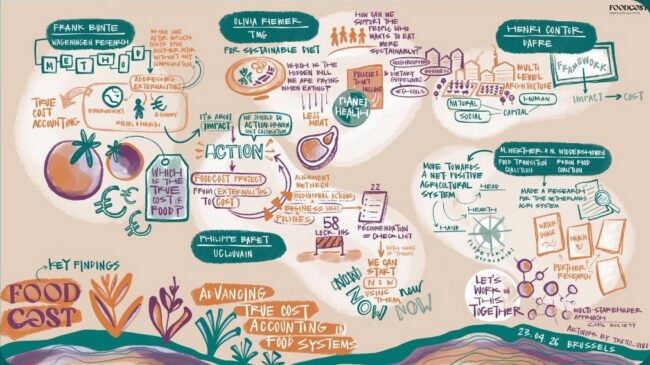
FOODCoST, a four-year, Horizon Europe-funded project sought to support the transition towards sustainable food systems by exploring how to calculate and internalize externalities in climate, biodiversity, environmental, social and health along the food value chain.
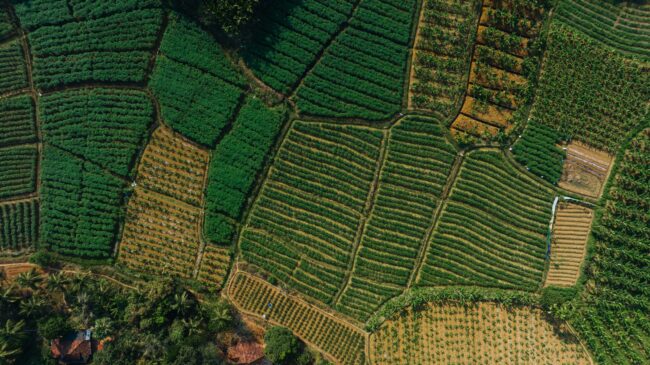
The Centre for Responsible Business (CRB) has partnered with the TEEB Unit of the United Nations Environment Programme to promote sustainable agriculture and supply chains in India, by supporting businesses to apply the TEEBAgriFood principles. These principles are outlined in the TEEBAgriFood Framework, the foundational framework for True Cost Accounting. The framework describes a four…

Since the historic Rio Declaration in 1992, successive leaders have signed onto ambitious emissions reduction and environmental goals. Global targets have been set for gender equality, poverty reduction, and to widen access to life-saving healthcare. While there have been some significant wins, overall progress on these collective goals remains elusive.

This January, over 140 Nobel and World Food Prize Laureates signed an open letter for “planet friendly ‘moonshot’ efforts” to avert a hunger catastrophe in the next 25 years. In the face of climate change, conflict, and market pressures, the letter called for urgent action to meet the food needs of 9.7 billion people by 2050.

“We have reached a now or never moment for upscaling TCA.”
In 2018, the TEEBAgriFood Evaluation Framework established a common architecture for applications of True Cost Accounting (TCA). This was a landmark in TCA’s development, representing a widespread consensus on the required elements of TCA applications and inspiring dozens of public and private sector case studies.
“It’s a critical time to double down on some of the methods, tools and processes by which we can help businesses maintain this ambition, keep this holistic lens, and really reduce some of that burden…I’m really hopeful that TCA offers an opportunity for the private sector to be good advocates alongside governments and consumers, and create that enabling space and enabling environment that we all need to meet our sustainability goals”.

2024 is a significant year for many reasons. High numbers of regional and national elections have contributed to a constantly shifting political landscape, with the US election still to come next week. At the same time, temperature records have been broken around the world, and reports on the state of biodiversity loss are increasingly dire.