War exposed our food system. Now what?
Jenn Yates, True Cost Accounting Accelerator Director and Anna Lappé, Global Alliance for the Future of Food Executive Director
As a new war rages in the Middle East and West Asia, the full costs of conflicts like this are becoming increasingly impossible to ignore.
First, there is the unconscionable scale of lives lost, including countless children. Then come the cascading consequences that ripple far beyond the front line in rising food prices, fertiliser shortages and hunger spreading across countries thousands of miles from the front line. Some of these consequences show up in economic data. Many others – the long-term health burden of food insecurity, the psychological toll on displaced communities – do not.
Economists call these hidden costs ‘externalities’: real impacts that fall outside traditional accounting, and, therefore, often outside the decisions of governments and businesses. If we have learned anything from this era of cascading crises, it’s that what gets measured matters, and for too long, the most consequential costs in our food systems have not been measured at all.
This is what true cost accounting sets out to fix. True cost accounting is not just an analytical framework but a way of seeing the world – a system that surfaces the hidden social, environmental and human costs and benefits that conventional economic models dangerously leave off the books. It does not just tell a more complete story; it gives decision-makers, including funders, advisors, and organisations, a foundation for investment that actually delivers the impact they seek.
The True Costs of Food
In a troubling recent analysis, the UN Food and Agriculture Organisation estimated that global food systems generated a staggering $10 trillion in hidden costs in 2020 alone, when accounting for factors such as non-communicable diseases and environmental degradation. Last year’s EAT-Lancet report concluded that transforming food systems is essential not only for human health and productivity but for maintaining planetary stability itself.
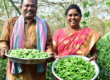
But beyond the headline numbers and analysis, the picture is even more urgent — our globalised industrial food system, with its long supply chains and overreliance on a handful of key inputs, is fundamentally illequipped for this age of poly-crisis. The war in the Middle East is only the latest proof. But we have seen the power of measuring what matters when it comes to food. One place where this is concretely demonstrated is in the Indian state of Andhra Pradesh. Twenty years ago, farmers and community leaders there faced a convergence of social, health and environmental crises. Determined to measure what matters, they looked beyond traditional metrics of yield and profit to ask something more fundamental: how could farmers be supported to adopt practices with fewer negative social and environmental impacts, while improving their livelihoods and building long-term resilience?
Their answer was Community-Managed Natural Farming, an approach centred on working with nature for pest resilience and soil fertility, reducing dependence on fossil fuel-based inputs and adopting agroecological practices including crop biodiversity and sustainable water management. Today, the program includes 1.5 million of the state’s six million farmers.
When researchers applied the true cost accounting lens to the program, they captured impacts that traditional metrics had missed entirely: Illness connected to chemical exposure declined, and community cohesion strengthened. At the same time, yields increased by 11 per cent and farmer incomes rose by nearly 50 per cent, driven by reduced input costs. And crucially, over the last five years, the program significantly reduced dependence on fossil-fuel-based inputs. Now, farmers in Andhra Pradesh are better positioned to weather any supply chain disruptions that have strained global food systems in recent years. All of these many benefits—from social to environmental to economic—are helpfully made visible through true cost accounting.
The Scale of the Opportunity
Andhra Pradesh is not alone – it’s proof of a concept that works. Since 2016, true cost accounting initiatives in over 36 countries have evaluated the positive and negative impacts of agricultural products, practices, and policies. The methodology has been tested by UN agencies, governments, businesses and producer organisations. The evidence base is growing. What has been missing is the investment to scale the adoption of true cost accounting.
This is where funders come in, and not only those in food systems. If you fund climate resilience, you have a stake in food systems that cut greenhouse gas emissions and reduce the land use change driving our climate crisis. If you fund public health, you have a stake in food systems that don’t generate trillions in hidden costs. If you fund biodiversity or sustainable development, the same logic applies. Food systems sit at the intersection of virtually every major challenge philanthropic capital is trying to solve. True cost accounting makes that intersection legible and actionable.
A Roadmap: The True Cost Accounting Action Agenda
Philanthropy has already played a catalytic role in getting true cost accounting this far, funding research and analytical tools, facilitating cross-sector collaboration and supporting on-theground implementation. The Global Alliance for the Future of Food recognised early that resilient food systems would remain out of reach as long as hidden costs were excluded from decision-making, and aligned funders accordingly. That early investment helped move true cost accounting from the margins. Now it’s time to move true cost accounting into the mainstream.
Momentum is building. Earlier this year, the True Cost Accounting Accelerator published the True Cost Accounting Action Agenda – a roadmap to mainstream true cost accounting by 2030, developed by more than 100 organisations across civil society, business, government, academia and philanthropy. Drawing on more than a decade of lessons and a year of global stakeholder consultation, the Action Agenda identifies concrete steps to embed true cost accounting into the decisions that shape our food systems, including sharpening advocacy, building the investment case, activating policy, broadening the coalition and increasing research capacity.
When we fail to account for what really matters within our food systems, the consequences fall hardest on those least able to bear them. True cost accounting has the tools to solve this, and we already have a framework, a coalition, and a roadmap. By investing in the priorities of the True Cost Accounting Action Agenda, philanthropy can embed true cost accounting into agricultural policy, financial markets, corporate strategy and development planning, accelerating a shift toward food systems that work for people and nature alike.
This opinion piece was first published in the Philanthropic Impact magazine.